Digital Banking
When the market has no data: offline field officers, USSD, and honest sync
How susu collectors and HP field officers in Ghana can keep working without 4G — and how receipts must sync without duplicating the ledger.
Yaw Mensah, Collections Lead · 7 January 2026 · 13 min read
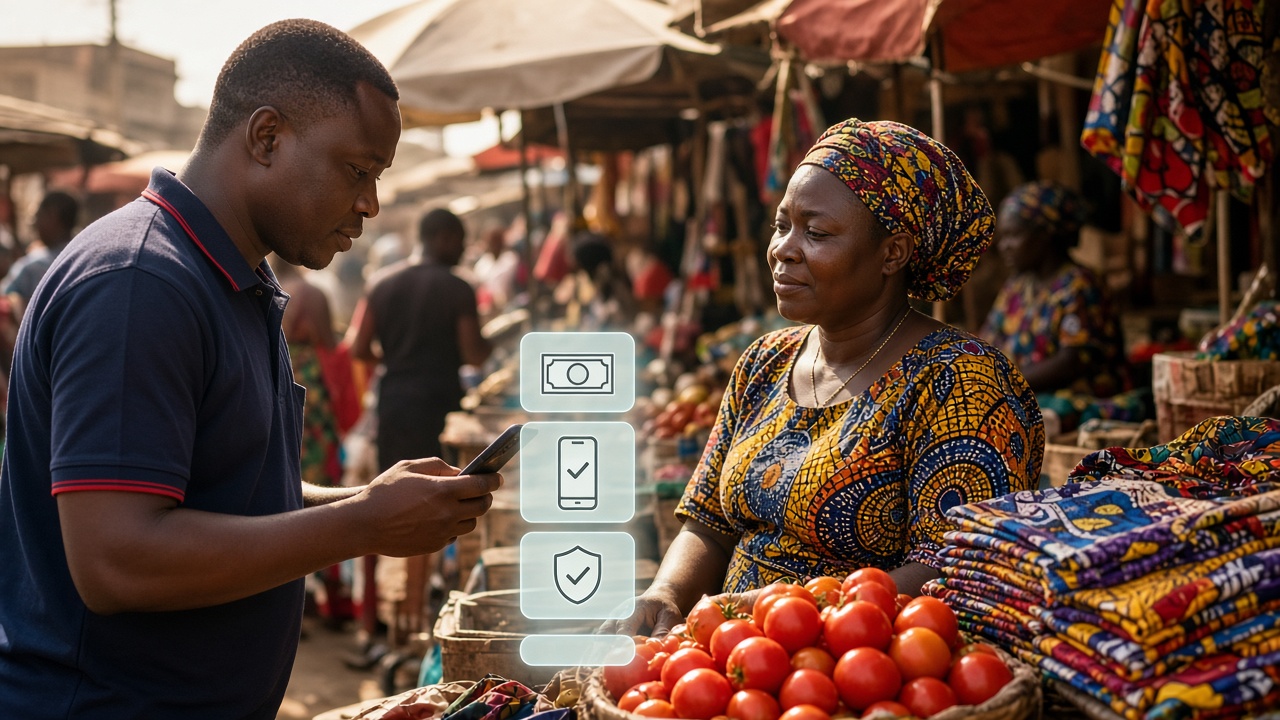
Ghanaian markets are not a fibre POP. A susu collector in Kejetia or a vehicle-finance officer in a lorry park will lose signal. If your app refuses to take a receipt until it can ping the server, you have designed a product for Accra offices, not for the book. Offline-first collection with a durable receipt id is the operating model.
The danger is double posting. Two syncs of the same cash, or a paper card that disagrees with the phone, will poison PAR and customer trust. Every offline receipt needs a client-generated id, a timestamp, and a conflict rule: the first successful post wins, duplicates are rejected, and the collector sees the result.
USSD is a channel, not a toy
Customers without smartphones still pay. A USSD flow that shows the amount due and posts to the instalment is worth more than a pretty app they will never open. Keep the menus short. Do not ask for a 12-digit reference they cannot see in the sun.
Paper cards as a backup, not the source of truth
Some collectors will keep a card. Fine. Photograph it into the vault at close of day if you must, but the ledger is the phone or USSD post. Training that 'the card is the real book' is how you get two institutions in one market.
- Issue a receipt the customer can quote even offline.
- Sync as soon as signal returns, with a visible pending queue.
- Block a second post of the same id.
- Reconcile collector cash against posted work the same evening.
What OrbitMFI assumes
Field queues, SMS, USSD, and teller cash share a contact and receipt log. The portal shows the last successful post. Collectors are measured on posted work, not on stories about network.